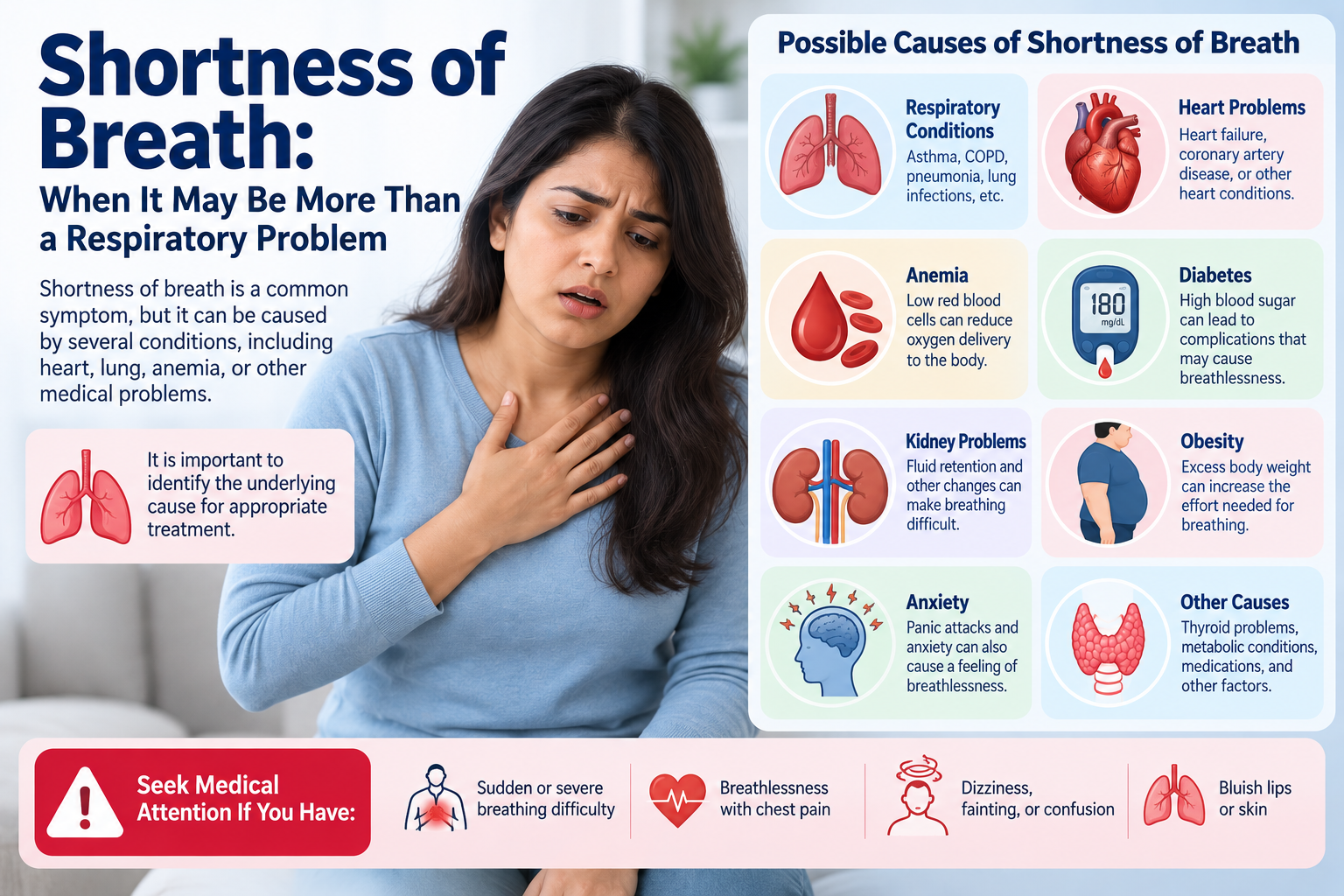
Shortness of breath is a common symptom that can occur after physical activity, during an illness, or because of underlying respiratory conditions. However, difficulty breathing is not always related to the lungs. Sometimes, it can be a warning sign of a heart condition, anemia, or another medical problem that requires attention.
If you experience breathlessness while walking, climbing stairs, or performing everyday activities, it is important to understand the possible causes rather than assuming it is simply due to weakness or a lack of fitness.
Shortness of breath, medically known as dyspnea, can have several causes, and identifying the underlying problem is essential for appropriate treatment.
What Is Shortness of Breath?
Shortness of breath is the feeling that you cannot get enough air or that breathing requires more effort than usual. It may develop suddenly or gradually over several days, weeks, or months.
Some people experience breathlessness only during physical activity, while others may notice it while resting or lying down.
Common symptoms associated with breathlessness include:
- A feeling of tightness in the chest
- Rapid or shallow breathing
- Difficulty taking a deep breath
- Unusual fatigue during physical activity
- Dizziness or lightheadedness
- A sensation of not getting enough oxygen
The severity of symptoms and the circumstances in which they occur can help a healthcare professional determine the possible cause.
1. Heart Problems Can Cause Shortness of Breath
One important cause of breathlessness is an underlying heart condition.
The heart pumps blood throughout the body, delivering oxygen to tissues and organs. When the heart cannot pump efficiently or when pressure builds up in the blood vessels of the lungs, breathing may become difficult.
Heart Failure
Heart failure does not mean that the heart has stopped working. It means the heart cannot pump or fill with blood as effectively as the body needs.
Possible symptoms include:
- Breathlessness during everyday activities
- Difficulty breathing when lying flat
- Waking up at night feeling short of breath
- Swelling in the feet, ankles, or legs
- Persistent fatigue
- Rapid weight gain due to fluid retention
These symptoms warrant medical evaluation, particularly when they are new or worsening.
Coronary Artery Disease
Coronary artery disease develops when the blood vessels supplying the heart become narrowed.
Some people experience chest discomfort during physical activity, while others may experience breathlessness, fatigue, or reduced exercise tolerance.
Sudden breathlessness accompanied by chest pressure, sweating, nausea, or pain spreading to the arm, back, neck, or jaw may indicate a heart attack and requires emergency medical attention.
2. Anemia Can Reduce Oxygen Delivery
Anemia occurs when the blood does not have enough healthy red blood cells or hemoglobin to carry oxygen effectively.
Iron deficiency is a common cause, although anemia can also result from vitamin deficiencies, chronic diseases, blood loss, and other conditions.
When oxygen delivery is reduced, the body may compensate by increasing the heart rate and breathing effort.
Symptoms may include:
- Breathlessness during routine activities
- Persistent tiredness
- Pale skin
- Dizziness
- Headaches
- A rapid heartbeat
- Reduced physical stamina
A complete blood count (CBC) can help identify anemia. Depending on the findings, a doctor may recommend iron studies, vitamin B12 testing, or additional investigations to determine the cause.
Taking iron supplements without confirming a deficiency is not recommended because not all anemia is caused by low iron.
3. Diabetes and Metabolic Conditions
Diabetes can increase the risk of cardiovascular disease, kidney disease, and other conditions that may contribute to breathlessness.
For example, long-standing diabetes can damage blood vessels and increase the likelihood of heart failure or coronary artery disease.
In some circumstances, very high blood glucose can lead to diabetic ketoacidosis (DKA), a serious medical emergency that can cause deep, rapid breathing, nausea, vomiting, abdominal pain, excessive thirst, and confusion.
People with diabetes who develop unexplained or worsening breathlessness should seek medical assessment rather than assuming that the symptom is directly caused by their blood sugar level.
4. Respiratory Conditions Are Still a Common Cause
Although breathlessness is not always a lung problem, several respiratory conditions can cause it.
Asthma
Asthma causes inflammation and narrowing of the airways. Symptoms may include wheezing, coughing, chest tightness, and episodes of difficulty breathing.
Symptoms can worsen at night, during exercise, or after exposure to allergens and irritants.
Chronic Obstructive Pulmonary Disease (COPD)
COPD is a chronic lung condition that makes it difficult to move air in and out of the lungs.
People may experience a persistent cough, mucus production, wheezing, and gradually worsening breathlessness. Smoking is a major risk factor, although other exposures can also contribute.
Pneumonia
Pneumonia is an infection that affects the lungs. It may cause fever, cough, chest discomfort, fatigue, and difficulty breathing.
Older adults and people with weakened immune systems may experience less typical symptoms.
If breathlessness develops alongside fever, worsening cough, or chest pain, medical evaluation may be necessary.
5. Kidney Problems Can Contribute to Breathlessness
The kidneys help regulate fluid balance and remove waste products from the body.
When kidney function is significantly reduced, excess fluid may accumulate. If fluid builds up in or around the lungs, breathing can become difficult.
Kidney disease can also contribute to anemia, which may further reduce exercise tolerance.
A doctor may recommend kidney function tests, including serum creatinine and estimated glomerular filtration rate (eGFR), when the symptoms or medical history suggest a kidney-related cause.
6. Anxiety and Panic Attacks
Anxiety can cause a person to feel unable to take a satisfying breath. During a panic attack, breathing may become rapid, and symptoms can include a racing heart, trembling, dizziness, chest tightness, and tingling sensations.
However, breathlessness should not automatically be attributed to anxiety, particularly when it is new, persistent, severe, or associated with other concerning symptoms.
A healthcare professional can help determine whether anxiety, a physical condition, or a combination of factors may be contributing.
7. Obesity and Poor Physical Fitness
Excess body weight can increase the effort required for movement and breathing. It may also increase the risk of conditions such as sleep apnea, heart disease, and diabetes.
People who are physically inactive may notice breathlessness when climbing stairs or walking briskly.
However, breathlessness that is disproportionate to the activity, progressively worsening, or accompanied by chest discomfort or dizziness should not be dismissed as a weight or fitness issue.
When Is Shortness of Breath an Emergency?
Seek emergency medical care immediately if you experience any of the following:
- Sudden or severe difficulty breathing
- Chest pain, pressure, or tightness
- Blue or grey lips or skin
- Fainting, confusion, or reduced alertness
- Breathlessness accompanied by cold sweating or severe weakness
- Sudden breathlessness with coughing up blood
- Difficulty breathing accompanied by swelling of the face, tongue, or throat
Do not wait for symptoms to improve on their own when severe warning signs are present.
If breathlessness is new, persistent, or worsening even without these emergency symptoms, arrange prompt medical evaluation.
How Is the Cause of Shortness of Breath Diagnosed?
The appropriate investigations depend on the symptoms, physical examination, medical history, and suspected cause.
A physician may recommend:
- Oxygen saturation measurement: Checks oxygen levels in the blood.
- Complete blood count (CBC): Helps identify anemia and certain infections.
- Blood glucose or HbA1c: Evaluates blood sugar levels when indicated.
- Kidney function tests: Assess kidney health.
- Electrocardiogram (ECG): Evaluates the heart’s electrical activity.
- Chest X-ray: Helps identify selected lung and heart abnormalities.
- Echocardiography: Examines heart structure and pumping function.
- Pulmonary function tests: Assess airflow and lung function.
- Additional blood tests or imaging: Used when a specific condition is suspected.
Not everyone needs all these tests. The doctor selects investigations based on the clinical findings.
How Can You Help Protect Your Heart and Lung Health?
Although not every cause of breathlessness can be prevented, several habits can support better overall health.
Maintain a Healthy Lifestyle
Eat a balanced diet, remain physically active within your abilities, avoid smoking, and limit exposure to air pollution and other respiratory irritants.
Monitor Existing Medical Conditions
If you have diabetes, high blood pressure, anemia, heart disease, or kidney disease, follow your recommended treatment and attend regular medical appointments.
Avoid Ignoring Persistent Symptoms
If everyday activities suddenly become more difficult or you notice a gradual decline in your ability to exercise, discuss the change with a healthcare professional.
Early evaluation can help identify treatable causes before complications develop.
Final Thoughts
Shortness of breath is a symptom with many possible causes. While asthma, pneumonia, and other respiratory conditions are common explanations, heart disease, anemia, kidney problems, diabetes-related complications, and other medical conditions may also contribute.
The timing of symptoms, associated warning signs, and your medical history can provide important clues, but a proper medical evaluation is needed to establish the cause.
If you experience unexplained breathlessness, especially during routine activities or when lying down, consult a healthcare professional. Seek emergency care for sudden or severe breathing difficulty or breathlessness accompanied by chest pain, fainting, or other serious warning signs.
Recognizing symptoms early and receiving appropriate treatment can help protect your health and improve your quality of life.