A small cut, blister, or wound usually heals without much concern. But for people with diabetes, even a minor injury can sometimes take much longer to heal and may become infected.
Persistent high blood sugar can affect the nerves and blood vessels that are important for healthy skin and wound repair. It can also make it harder for the body to fight infection. As a result, people with diabetes may be more likely to develop wounds that heal slowly, particularly on the feet.
Understanding why this happens—and knowing when a wound needs medical attention—can help prevent serious complications.
Why Does High Blood Sugar Slow Wound Healing?
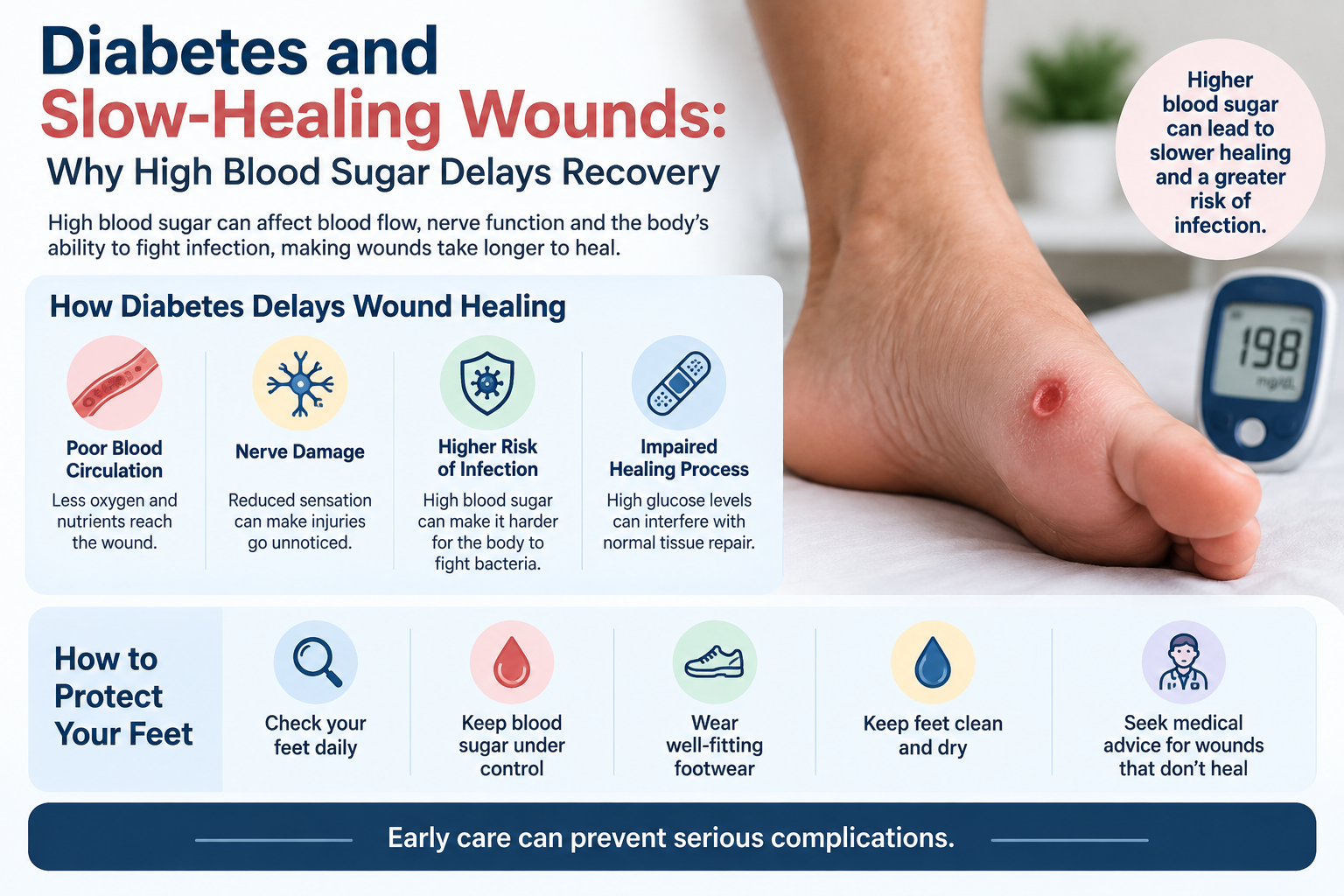
Diabetes can interfere with several processes involved in normal wound healing.
1. Reduced Blood Circulation
High blood glucose over time can contribute to blood vessel damage and circulation problems. Reduced blood flow means less oxygen and fewer nutrients may reach damaged tissue.
Peripheral artery disease (PAD), which can occur more frequently in people with diabetes, can further reduce blood flow to the legs and feet and interfere with wound healing.
2. Nerve Damage Can Hide Injuries
Diabetes can cause peripheral neuropathy, a form of nerve damage that commonly affects the feet and legs.
Reduced sensation may mean a person doesn’t notice a blister, cut, pressure point, or small injury. A wound can therefore worsen before it is discovered.
3. Greater Risk of Infection
An open wound provides an opportunity for bacteria to enter the body. Diabetes-related changes in circulation and immune function can make infections more difficult to control.
The CDC lists slow-healing cuts, sores, or wounds among the symptoms that can occur with type 2 diabetes.
4. High Blood Sugar Can Affect the Healing Process
Persistent hyperglycemia can interfere with cellular processes involved in tissue repair and immune defense. Research into diabetic foot ulcers has found changes in immune responses at wound sites that may contribute to delayed healing.
Why Are the Feet Particularly Vulnerable?
The feet are especially important because they experience pressure and friction every day.
A person with diabetes may develop a blister from footwear or a small cut without noticing it because of reduced sensation. If circulation is also poor, the wound may take longer to heal.
Without appropriate care, an untreated wound can become infected and develop into a diabetic foot ulcer.
Signs That a Wound May Not Be Healing Properly
Pay attention to wounds that:
- Remain open or show little improvement after several days
- Become increasingly red or swollen
- Feel warm or painful
- Produce discharge or an unpleasant odor
- Develop increasing discoloration
- Become surrounded by irritated skin
- Are accompanied by fever or feeling unwell
A cut, blister, or sore on the foot that does not begin to heal after a few days should be assessed by a healthcare professional.
How Can People With Diabetes Protect Their Feet?
Good foot care is an important part of diabetes management.
Check Your Feet Every Day
Look carefully for:
- Cuts
- Blisters
- Redness
- Swelling
- Cracks
- Calluses
- Changes in skin color
- Areas that feel unusually warm
If it is difficult to see the bottom of your feet, use a mirror or ask someone to help.
Keep Blood Sugar Under Control
Managing blood glucose is an important part of reducing the risk of diabetes-related complications. Good glucose management can help protect nerves and blood vessels over time.
Wear Appropriate Footwear
Well-fitting, supportive footwear can reduce friction and pressure on the feet.
Avoid walking barefoot when possible, particularly if you have reduced sensation in your feet.
Keep the Skin Clean
Wash your feet regularly with warm—not hot—water and dry them carefully, especially between the toes. NIDDK recommends avoiding prolonged soaking because it can dry or damage the skin.
Should You Treat a Diabetic Wound at Home?
A minor injury still deserves attention if you have diabetes.
Clean the area according to your healthcare provider’s instructions and protect it from further friction or pressure. Avoid applying unrecommended chemicals, creams, or home remedies to an open wound without medical advice.
If the wound is not improving, becomes infected, or is located on the foot, contact your healthcare professional promptly.
Do not wait for a wound to become severely painful—especially if you have diabetic neuropathy and reduced sensation.
When Should You See a Doctor?
Seek medical evaluation promptly if you have a diabetic wound that:
- Is not beginning to heal
- Becomes red, warm, swollen, or increasingly painful
- Produces pus or other discharge
- Develops a foul smell
- Turns dark or black
- Is accompanied by fever or chills
- Is getting larger or deeper
A rapidly worsening wound or signs of a serious infection require urgent medical attention.
Can Better Diabetes Management Help?
Yes. Maintaining blood glucose within the target range recommended by your healthcare team is an important part of preventing diabetes complications.
Blood glucose management is particularly important because diabetes-related nerve damage and circulation problems can increase the likelihood of foot wounds and make them harder to heal.
Other factors such as smoking, circulation problems, kidney disease, previous foot ulcers, and existing nerve damage can also influence wound healing.
Final Thoughts
A wound that refuses to heal should not be ignored, particularly if you have diabetes.
High blood sugar can contribute to nerve damage, circulation problems, impaired immune responses, and an increased risk of infection—all of which can interfere with normal wound healing.
Regular foot checks, appropriate footwear, good diabetes management, and early medical attention can help reduce the risk of serious complications.
If you have diabetes and notice a cut, blister, or sore that is not healing normally, contact your healthcare professional rather than waiting for it to get worse.