Hair loss is often blamed on stress, poor nutrition, seasonal changes, or hair-care products. However, sometimes the underlying cause may be a thyroid disorder.
The thyroid gland produces hormones that help regulate metabolism, energy, body temperature, and several other processes throughout the body. When thyroid hormone levels are too low or too high, changes in the hair growth cycle can occur, potentially leading to increased hair shedding, thinning, or changes in hair texture.
But does every case of hair loss require a thyroid test? Not necessarily. Knowing when thyroid problems may be contributing can help you decide when it is worth discussing testing with a doctor.
How Can Thyroid Problems Cause Hair Loss?
Hair normally goes through a continuous cycle of growth, resting, and shedding. Thyroid hormone imbalances can interfere with this cycle.
Both hypothyroidism (underactive thyroid) and hyperthyroidism (overactive thyroid) may be associated with hair changes.
With hypothyroidism, hair may become:
- Dry or coarse
- Brittle
- Thinner than usual
- More prone to shedding
Some people may also notice thinning of the eyebrows, particularly toward the outer edges.
Hyperthyroidism can also cause diffuse hair thinning or increased shedding.
Because hair grows slowly, changes may not become noticeable immediately after thyroid hormone levels change.
Signs That Hair Loss May Be Related to Your Thyroid
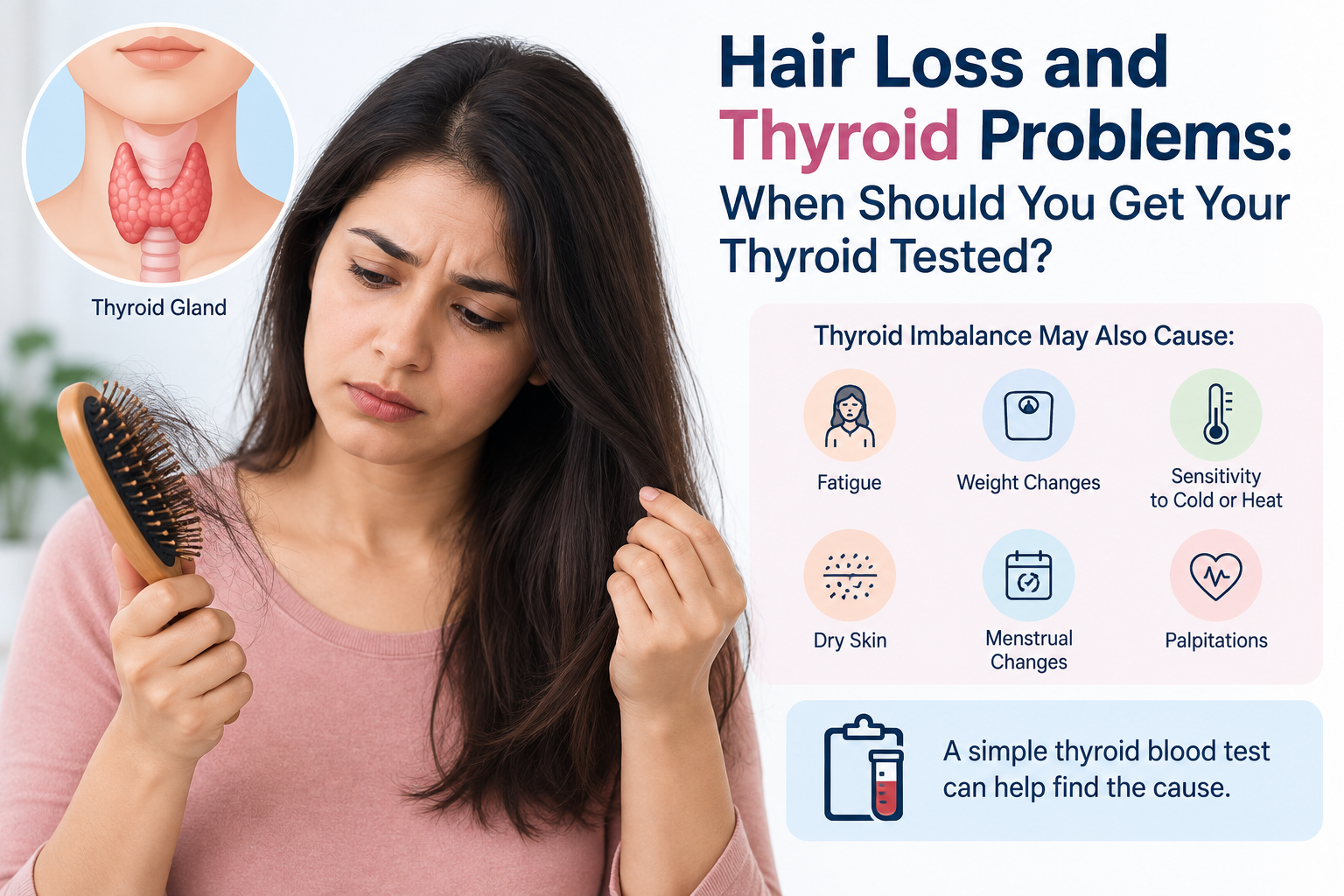
Hair loss by itself does not confirm a thyroid disorder. However, thyroid testing may be worth discussing with your doctor when hair loss occurs along with other symptoms.
Possible Signs of Hypothyroidism
An underactive thyroid may cause symptoms such as:
- Persistent tiredness
- Unexplained weight gain
- Feeling unusually cold
- Dry skin
- Constipation
- Muscle aches or weakness
- Difficulty concentrating
- Low mood
- Changes in menstrual cycles
- Slow heart rate
If several of these symptoms occur alongside unexplained hair thinning or shedding, thyroid function may need to be evaluated.
Possible Signs of Hyperthyroidism
An overactive thyroid can cause:
- Unexplained weight loss
- Fast or irregular heartbeat
- Increased sweating
- Feeling unusually hot
- Nervousness or irritability
- Tremors
- Difficulty sleeping
- Frequent bowel movements
- Muscle weakness
- Changes in menstrual cycles
Hair thinning accompanied by several of these symptoms warrants medical evaluation.
When Should You Get Your Thyroid Tested?
There is no single amount of hair loss that automatically means you need a thyroid test.
Consider speaking with a healthcare professional if you experience persistent or unexplained hair loss, particularly when it occurs together with other symptoms suggestive of thyroid dysfunction.
Testing may also be considered when:
- Hair shedding continues for several weeks or months
- Hair is becoming noticeably thinner without an obvious explanation
- You have symptoms of hypothyroidism or hyperthyroidism
- You have a personal history of thyroid disease
- Thyroid disorders run in your family
- Hair loss occurs along with significant changes in weight or energy
- You experience unexplained changes in your menstrual cycle
- You develop persistent dry skin, temperature sensitivity, or changes in bowel habits
A doctor can determine whether thyroid testing is appropriate based on your symptoms and medical history.
Which Thyroid Tests Are Usually Done?
The initial evaluation commonly includes a TSH (thyroid-stimulating hormone) test.
Depending on the TSH result and your symptoms, your doctor may recommend additional testing, such as free T4 and, in selected situations, other thyroid-related tests.
The results need to be interpreted in context. A slightly abnormal result does not always mean that thyroid disease is the cause of your hair loss.
Thyroid Problems Are Not the Only Cause of Hair Loss
It is important not to assume that every case of hair loss is caused by the thyroid.
Other common causes include:
- Iron deficiency
- Nutritional deficiencies
- Significant stress
- Recent illness or fever
- Hormonal changes
- Pregnancy and the postpartum period
- Certain medications
- Rapid weight loss
- Scalp conditions
- Autoimmune disorders
- Genetic or pattern hair loss
This is why a proper medical evaluation is often more useful than simply taking hair supplements.
What Happens If a Thyroid Problem Is Found?
If testing confirms a thyroid disorder, treatment is directed at correcting the underlying hormone imbalance.
For hypothyroidism, doctors commonly prescribe thyroid hormone replacement. Hyperthyroidism requires a different treatment approach depending on its cause and severity.
Once thyroid hormone levels are appropriately managed, thyroid-related hair shedding may gradually improve. However, hair recovery can take time because hair follicles follow a slow growth cycle.
It is important to take thyroid medication exactly as prescribed and attend recommended follow-up appointments.
Should You Take Hair Supplements?
Hair supplements are not a substitute for finding the underlying cause of hair loss.
If thyroid dysfunction, iron deficiency, nutritional deficiency, or another medical condition is responsible, treating that condition is more important than taking supplements without guidance.
Some supplements can also interfere with laboratory testing or medications. Discuss supplements with your healthcare provider before starting them, particularly if you are already taking thyroid medication.
When Should You See a Doctor About Hair Loss?
Make an appointment with a healthcare professional if your hair loss is:
- Persistent or progressively worsening
- Sudden or extensive
- Associated with significant fatigue or weakness
- Accompanied by unexplained weight changes
- Occurring with palpitations or tremors
- Associated with menstrual changes
- Accompanied by scalp inflammation, scaling, or painful areas
- Causing visible patches of baldness
A doctor can evaluate your symptoms and determine whether thyroid testing or other blood tests are appropriate.
Final Thoughts
Hair loss can have many causes, and thyroid disorders are one possibility—especially when hair thinning occurs alongside changes in weight, energy, temperature tolerance, heart rate, bowel habits, or menstrual cycles.
If you have persistent unexplained hair loss, don’t assume that the problem is simply related to your hair-care routine. A medical evaluation can help identify whether thyroid dysfunction or another underlying condition is contributing.
Early diagnosis and appropriate treatment can help manage thyroid problems and may allow normal hair growth to gradually return.
If you are experiencing unexplained hair loss along with other symptoms of thyroid dysfunction, speak with an internal medicine physician about whether thyroid testing is appropriate for you.