High blood pressure, or hypertension, is often connected to broader metabolic health. Factors such as excess weight, insulin resistance, high blood sugar, poor diet, physical inactivity, and chronic stress can all contribute to elevated blood pressure.
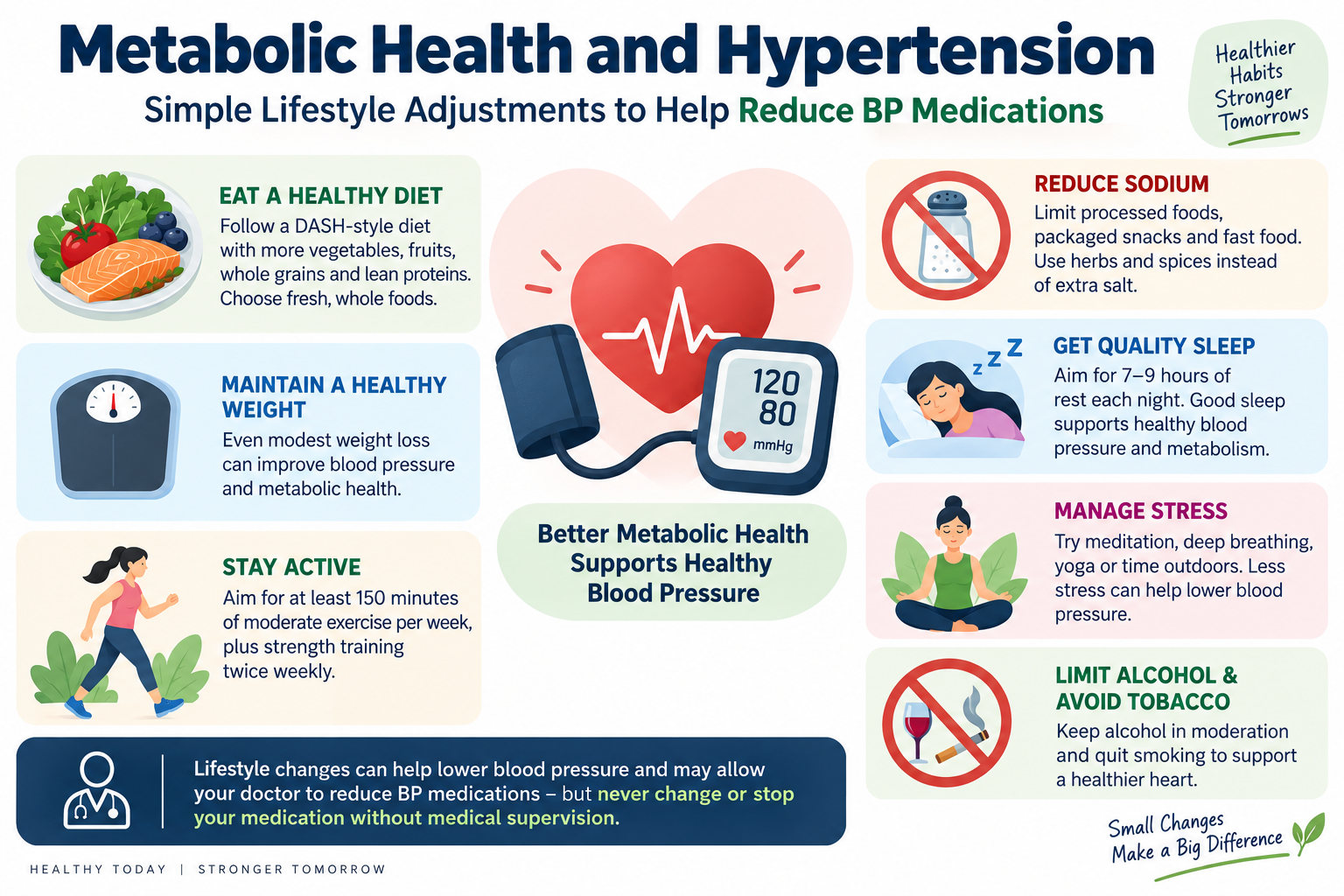
The encouraging news is that improving metabolic health can help lower blood pressure and, in some people, may allow a doctor to reduce the dose or number of blood pressure medications. However, medications should never be reduced or stopped without medical supervision.
The goal isn’t to replace prescribed treatment with lifestyle changes. Instead, healthy habits can work alongside medical treatment to improve blood pressure control and overall cardiovascular health.
What Is Metabolic Health?
Metabolic health refers to how effectively your body manages important processes such as:
- Blood sugar regulation
- Blood pressure
- Cholesterol and triglycerides
- Body weight and waist circumference
- Insulin sensitivity
- Energy metabolism
Poor metabolic health can increase the risk of hypertension, type 2 diabetes, fatty liver disease, heart disease, and stroke.
How Metabolic Health and Blood Pressure Are Connected
Several metabolic factors can push blood pressure upward.
Insulin Resistance
When cells become less responsive to insulin, the body may produce more insulin to maintain normal blood sugar. Insulin resistance is commonly associated with abdominal obesity, abnormal cholesterol levels, and hypertension.
Excess Abdominal Fat
Visceral fat—the fat stored around internal organs—is metabolically active. Excess visceral fat is associated with inflammation and insulin resistance and can contribute to higher cardiovascular risk.
High Sodium and Processed Foods
Diets high in sodium and ultra-processed foods can contribute to elevated blood pressure, particularly in people who are sodium-sensitive.
Physical Inactivity
Regular movement supports healthy blood vessels, weight management, insulin sensitivity, and cardiovascular fitness.
Can Lifestyle Changes Reduce the Need for BP Medication?
Sometimes, yes—but only under medical supervision.
Improving diet, physical activity, weight, sleep, and other cardiovascular risk factors can lower blood pressure. If blood pressure improves consistently, a healthcare professional may determine that a medication dose can be adjusted.
The response varies from person to person. Some individuals will still require medication even after making significant lifestyle improvements.
Never stop blood pressure medicine suddenly or change the dose yourself.
7 Lifestyle Adjustments for Better Metabolic Health
1. Work Toward a Healthy Weight
If you’re overweight, even modest weight loss can improve blood pressure and metabolic health.
Rather than following crash diets, focus on sustainable changes such as:
- Smaller portions
- More vegetables
- Adequate protein
- High-fiber foods
- Fewer sugary drinks
- Less highly processed food
Your healthcare professional can help establish a safe and realistic weight-loss target.
2. Follow a DASH-Style Eating Pattern
The DASH (Dietary Approaches to Stop Hypertension) eating pattern is designed to support healthy blood pressure.
Build meals around:
- Vegetables
- Fruits
- Whole grains
- Beans and lentils
- Nuts and seeds
- Low-fat dairy
- Fish and lean protein
At the same time, reduce foods high in sodium, saturated fat, and added sugars.
3. Reduce Excess Sodium
Reducing sodium intake can help lower blood pressure, especially for people who are salt-sensitive.
Watch for hidden sodium in:
- Packaged snacks
- Instant noodles
- Pickles
- Processed meats
- Sauces
- Ready-to-eat meals
- Fast food
- Packaged soups
Instead, flavor meals with herbs, spices, garlic, ginger, lemon, and other sodium-free seasonings.
4. Exercise Regularly
Physical activity helps improve insulin sensitivity, cardiovascular fitness, body composition, and blood pressure.
A practical target is:
- 150 minutes of moderate aerobic activity per week
- Strength training on at least 2 days per week
You don’t need to start with intense workouts. Brisk walking, cycling, swimming, and similar activities can be effective.
5. Prioritize Sleep
Poor sleep can negatively affect blood pressure and metabolic health.
Most adults should aim for around 7–9 hours of quality sleep each night.
If you regularly snore loudly, wake up gasping, or feel excessively tired during the day, discuss these symptoms with a healthcare professional because sleep apnea can be associated with hypertension.
6. Manage Chronic Stress
Stress doesn’t always cause chronic hypertension by itself, but persistent stress can make healthy habits harder to maintain and may contribute to temporary blood pressure elevations.
Try incorporating:
- Deep breathing
- Meditation
- Yoga
- Walking
- Time outdoors
- Relaxation exercises
Even a few minutes of intentional relaxation each day can become part of a sustainable routine.
7. Limit Alcohol and Avoid Tobacco
Excessive alcohol consumption can raise blood pressure and contribute to weight gain and metabolic problems.
Smoking and tobacco use also significantly increase cardiovascular risk.
If you smoke, quitting is one of the most important steps you can take for long-term heart health.
Monitor Your Blood Pressure at Home
Home blood pressure monitoring can help you and your doctor understand whether lifestyle changes are working.
For more reliable readings:
- Sit quietly for several minutes before measuring.
- Keep your back supported.
- Place both feet flat on the floor.
- Support your arm at heart level.
- Use a properly sized upper-arm cuff.
- Take readings consistently at similar times.
- Keep a record of your results.
Don’t make medication decisions based on a single reading. Your healthcare professional can interpret your blood pressure trend alongside your overall health.
What Happens When Blood Pressure Improves?
If lifestyle changes consistently improve your blood pressure, your doctor may reassess your treatment plan.
Depending on your individual situation, this could mean:
- Continuing the same medication
- Adjusting the dose
- Changing medications
- Reducing the number of medications
- Continuing medication while maintaining lifestyle improvements
The decision depends on factors such as your blood pressure readings, age, kidney function, diabetes status, cardiovascular risk, and other medical conditions.
A Common Mistake to Avoid
One of the biggest mistakes people make is thinking:
“My blood pressure is normal, so I don’t need my medicine anymore.”
Blood pressure may be controlled because the medication is working.
If you stop taking it without medical guidance, your blood pressure may rise again and potentially increase your risk of heart attack, stroke, kidney problems, or other complications.
When to Seek Medical Care
Speak with your healthcare professional if:
- Your blood pressure remains consistently elevated.
- You experience dizziness after starting or changing medication.
- Your readings are consistently lower than expected.
- You want to reduce your medication dose.
- You’re making major dietary or exercise changes.
- You have diabetes, kidney disease, or heart disease.
If blood pressure is 180/120 mmHg or higher, repeat the measurement after a short period of rest. If it remains that high, seek urgent medical advice. If very high blood pressure occurs with symptoms such as chest pain, severe shortness of breath, weakness, confusion, or vision changes, seek emergency medical care.
Final Thought
Hypertension isn’t just a blood pressure problem—it can be part of a larger pattern of metabolic and cardiovascular health.
Improving your diet, maintaining a healthy weight, exercising regularly, reducing excess sodium, sleeping well, managing stress, and avoiding tobacco can all support better blood pressure control.
For some people, these improvements may eventually allow their healthcare professional to reduce blood pressure medication, but the process should always be medically supervised.
Think of lifestyle changes not as a replacement for treatment, but as an additional tool for building better long-term metabolic and heart health.