Note: The condition previously known as Non-Alcoholic Fatty Liver Disease (NAFLD) is now more commonly referred to as Metabolic Dysfunction-Associated Steatotic Liver Disease (MASLD). Since many people are still familiar with the term NAFLD, both names are mentioned in this article.
Fatty liver disease is becoming increasingly common, affecting millions of people worldwide. Often called a “silent” condition, it can develop for years without noticeable symptoms. Left untreated, it may progress to inflammation, liver scarring, and even cirrhosis.
The good news is that early-stage fatty liver disease is often reversible. With timely diagnosis and healthy lifestyle changes, many people can significantly reduce liver fat and improve overall liver function.
Here’s what you need to know about recognizing the early signs, understanding reversibility, and making simple diet changes that support a healthier liver.
What Is Non-Alcoholic Fatty Liver Disease (NAFLD)?
NAFLD, now called MASLD (Metabolic Dysfunction-Associated Steatotic Liver Disease), occurs when excess fat accumulates in the liver in people who drink little or no alcohol.
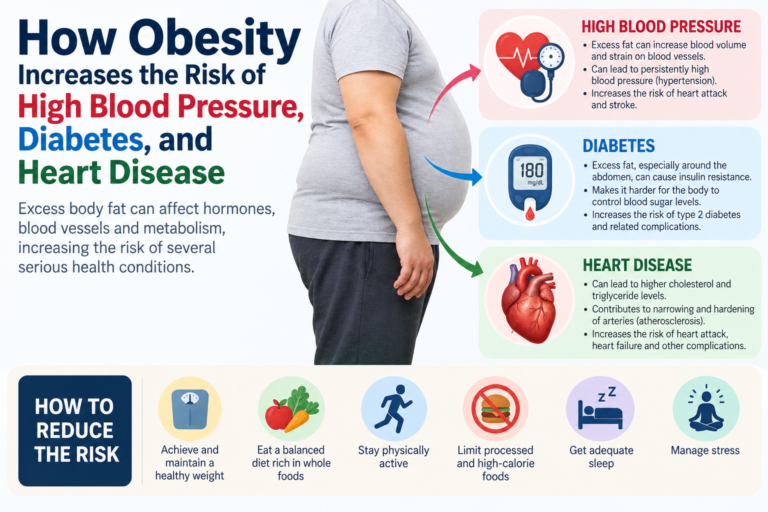
It commonly develops alongside metabolic conditions such as:
- Obesity
- Type 2 diabetes
- Prediabetes
- High cholesterol
- High triglycerides
- High blood pressure
There are two main stages:
Simple Fatty Liver (Steatosis)
Fat accumulates in liver cells with little or no inflammation.
This stage is usually reversible.
Fatty Liver with Inflammation (MASH)
Previously called NASH (Non-Alcoholic Steatohepatitis), Metabolic Dysfunction-Associated Steatohepatitis (MASH) involves fat buildup along with liver inflammation and damage.
Without treatment, it may progress to:
- Liver fibrosis
- Cirrhosis
- Liver failure
- Liver cancer
Early Signs of Fatty Liver Disease
Most people have no symptoms during the early stages.
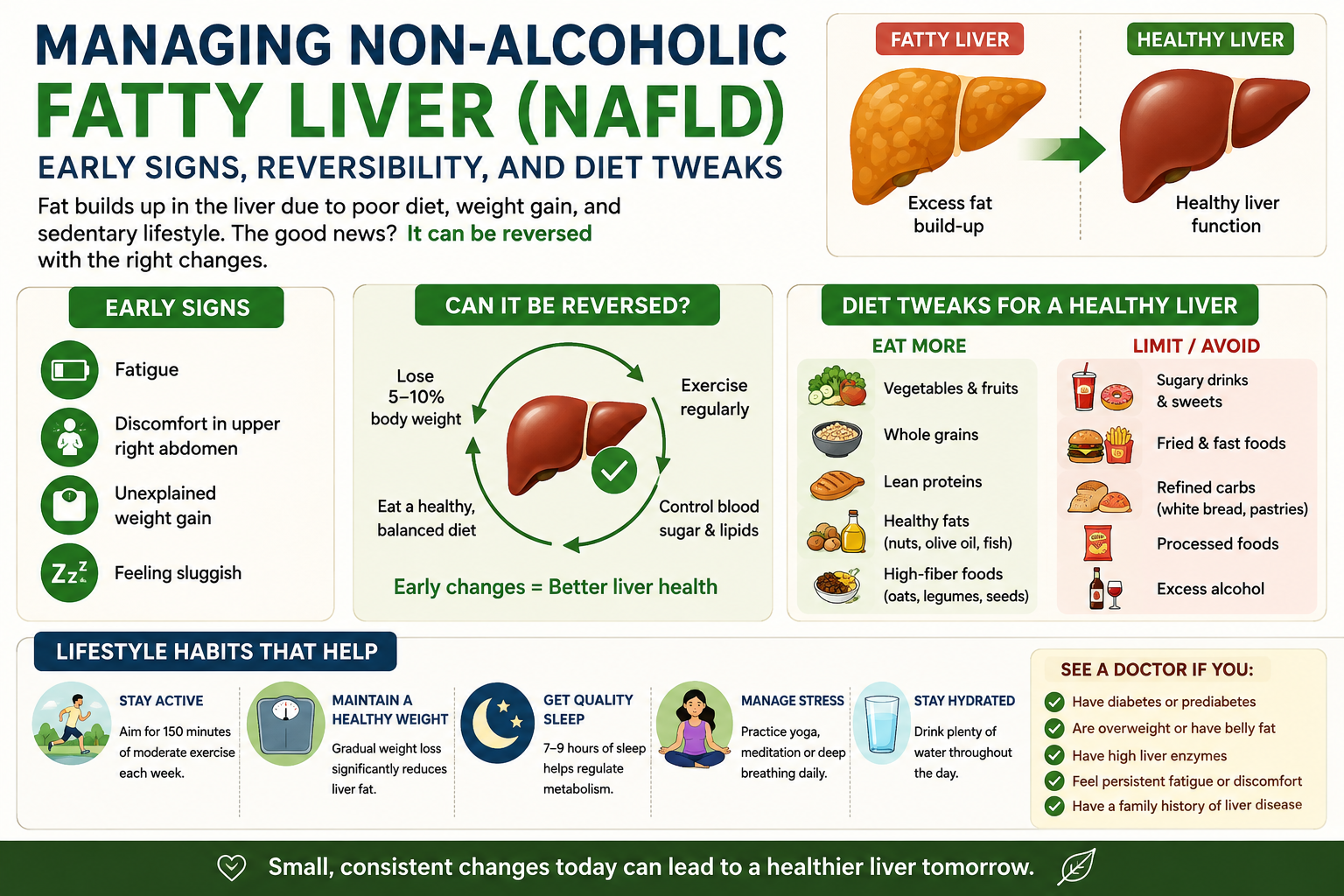
When symptoms do occur, they may include:
- Persistent fatigue
- Feeling sluggish
- Mild discomfort or fullness in the upper right abdomen
- Unexplained weakness
- Difficulty losing weight
Many cases are first detected through:
- Routine blood tests showing elevated liver enzymes
- Ultrasound scans
- Health screenings for diabetes or obesity
Who Is Most at Risk?
Risk factors include:
- Overweight or obesity
- Excess belly fat
- Type 2 diabetes
- Insulin resistance
- Prediabetes
- High cholesterol
- High triglycerides
- Sedentary lifestyle
- Family history of fatty liver disease
The more metabolic risk factors you have, the higher your chances of developing fatty liver disease.
Can Fatty Liver Be Reversed?
For many people, yes.
If significant liver scarring has not yet developed, reducing liver fat through lifestyle changes can improve liver function and lower the risk of complications.
Research suggests that:
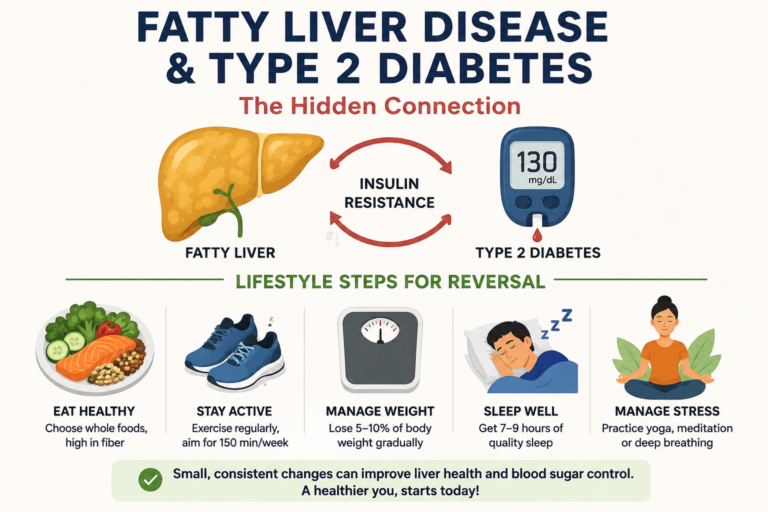
- Losing 5% of body weight can reduce liver fat.
- Losing 7–10% of body weight may reduce inflammation and improve liver health.
- Greater weight loss may help improve liver fibrosis in some individuals.
Consistency matters more than rapid weight loss, which can temporarily stress the liver.
Diet Tweaks That Support Liver Health
1. Eat More Whole Foods
Build meals around:
- Fresh vegetables
- Fruits
- Whole grains
- Beans
- Lentils
- Lean proteins
- Healthy fats
These foods provide nutrients that support liver function while helping regulate blood sugar.
2. Increase Fiber Intake
Fiber improves digestion, supports a healthy gut microbiome, and may reduce liver fat.
Excellent sources include:
- Oats
- Brown rice
- Apples
- Pears
- Berries
- Broccoli
- Carrots
- Chickpeas
- Lentils
Aim for 25–35 grams of fiber daily.
3. Reduce Added Sugar
Excess sugar—especially fructose—encourages the liver to produce more fat.
Limit:
- Soft drinks
- Sweetened coffee drinks
- Candy
- Cakes
- Pastries
- Sweetened cereals
- Packaged fruit juices
4. Choose Healthy Fats
Replace saturated and trans fats with healthier options such as:
- Olive oil
- Avocados
- Almonds
- Walnuts
- Chia seeds
- Flaxseeds
- Fatty fish like salmon and sardines
Omega-3 fatty acids may help reduce liver fat and improve triglyceride levels.
5. Limit Highly Processed Foods
Ultra-processed foods often contain excess:
- Sugar
- Salt
- Refined flour
- Unhealthy fats
Examples include:
- Chips
- Fast food
- Frozen processed meals
- Sugary snacks
Replacing these with homemade meals can make a meaningful difference.
Lifestyle Habits That Help Reverse Fatty Liver
Stay Active
Regular exercise improves insulin sensitivity and helps reduce liver fat.
Aim for:
- 150 minutes of moderate aerobic activity each week
- Strength training at least twice weekly
Even brisk walking after meals can support blood sugar control.
Maintain a Healthy Weight
Gradual, sustainable weight loss is one of the most effective ways to improve fatty liver disease.
Avoid crash diets and rapid weight-loss programs.
Get Better Sleep
Poor sleep contributes to:
- Insulin resistance
- Weight gain
- Increased liver fat
Aim for 7–9 hours of quality sleep each night.
Manage Stress
Chronic stress increases cortisol levels, which may negatively affect metabolism and liver health.
Helpful stress-management techniques include:
- Yoga
- Meditation
- Deep breathing
- Mindfulness
- Regular outdoor walks
Foods That May Benefit Liver Health
Research suggests these foods can support liver function:
- Coffee (in moderation, if appropriate for you)
- Green tea
- Leafy greens
- Broccoli
- Garlic
- Berries
- Citrus fruits
- Oats
- Olive oil
- Fatty fish
These foods work best as part of an overall balanced eating pattern.
When Should You See a Doctor?
Consult a healthcare professional if you:
- Have type 2 diabetes or prediabetes
- Have obesity or excess abdominal fat
- Have elevated liver enzymes
- Experience ongoing fatigue
- Have a family history of liver disease
- Notice persistent upper abdominal discomfort
Early evaluation can help identify liver disease before irreversible damage occurs.
Final Thoughts
Fatty liver disease often develops quietly, but early action can make a significant difference. In its initial stages, MASLD (formerly NAFLD) is frequently reversible through gradual weight loss, a nutrient-rich diet, regular physical activity, and healthy daily habits.
Rather than relying on quick fixes, focus on consistent lifestyle improvements. Small changes—such as eating more whole foods, reducing added sugar, staying active, and maintaining a healthy weight—can reduce liver fat, improve overall metabolic health, and help prevent long-term liver complications.