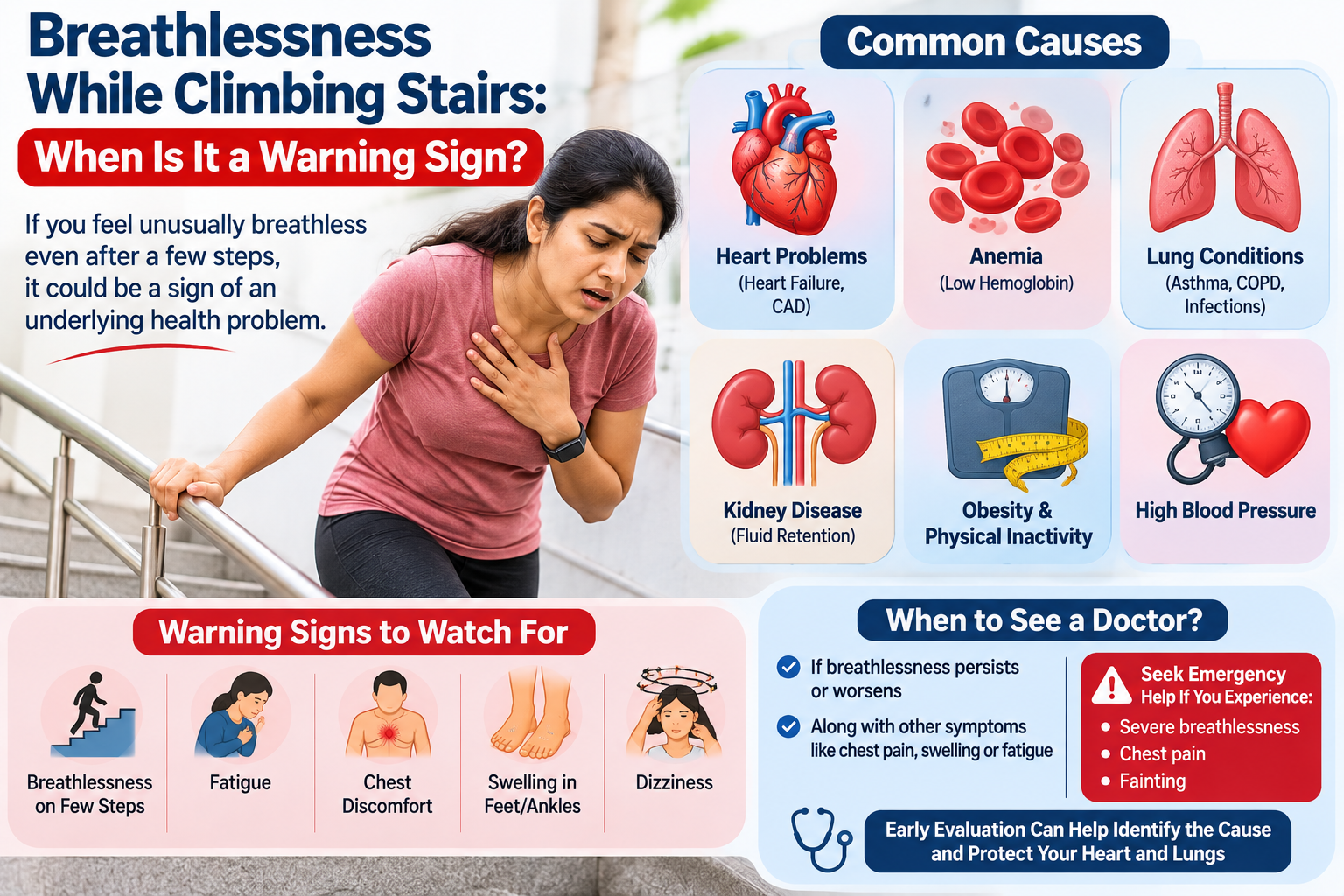
Do you feel unusually breathless while climbing stairs, even when walking short distances or performing routine activities? While getting slightly out of breath after physical exertion can be normal, experiencing excessive or unexplained breathlessness should not be ignored.
Climbing stairs requires more energy than walking on a flat surface. Your heart and lungs must work harder to deliver oxygen to your muscles. However, if you frequently struggle to catch your breath after climbing just a few steps, it may indicate an underlying health problem.
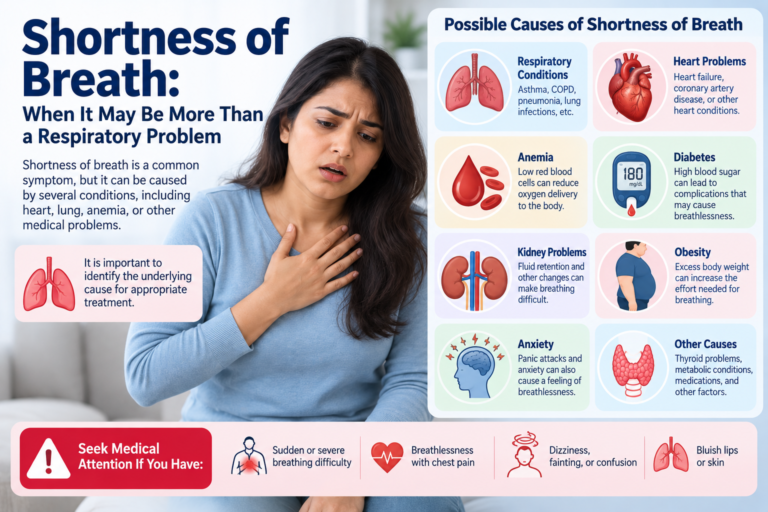
Breathlessness during physical activity, medically known as exertional dyspnea, can sometimes be an early warning sign of heart disease, lung conditions, anemia, or other medical disorders.
Understanding the possible causes and recognizing when to seek medical attention can help prevent complications.
Is Breathlessness While Climbing Stairs Normal?
It is normal to breathe faster after climbing several flights of stairs, especially if you are physically inactive or have not exercised regularly.
However, breathlessness may require medical attention when:
- You become breathless after climbing just a few steps.
- You struggle to breathe during activities you previously performed comfortably.
- Your breathing takes unusually long to return to normal.
- You experience breathlessness even during slow walking.
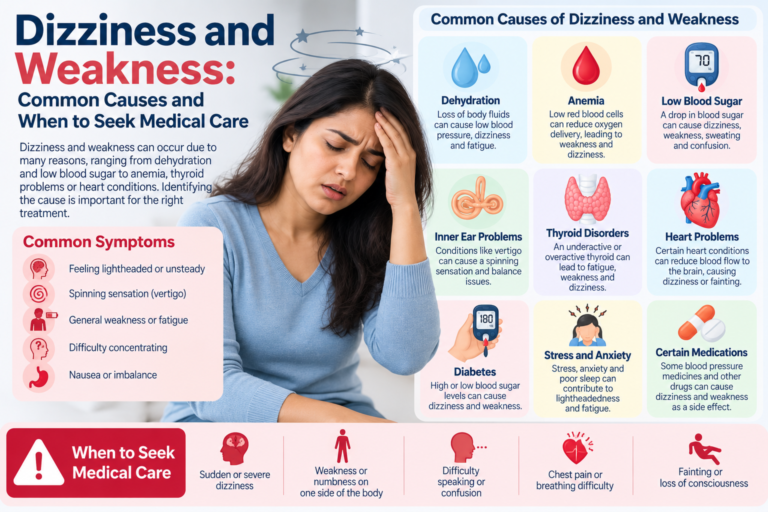
- You develop chest discomfort, dizziness, or unusual fatigue.
- Your symptoms are gradually becoming worse.
The frequency, severity, and progression of breathlessness are important clues when identifying its underlying cause.
1. Heart Problems Can Cause Breathlessness
One important cause of breathlessness during physical activity is an underlying heart condition.
Your heart pumps oxygen-rich blood throughout the body. During exercise or stair climbing, the muscles require more oxygen, so the heart must increase its pumping activity.
If the heart cannot meet this increased demand, you may experience unusual breathlessness.
Heart Failure
Heart failure occurs when the heart cannot pump blood effectively or fill properly to meet the body’s needs.
It can cause pressure and fluid buildup in the lungs, making breathing difficult, particularly during physical activity.
Common symptoms include:
- Breathlessness while climbing stairs
- Difficulty breathing when lying flat
- Waking up at night gasping for air
- Swelling in the feet and ankles
- Persistent tiredness
- Rapid weight gain due to fluid retention
Breathlessness accompanied by swollen ankles or difficulty lying flat should be evaluated by a healthcare professional.
Coronary Artery Disease
Coronary artery disease develops when the arteries supplying blood to the heart become narrowed due to plaque buildup.
This can reduce the oxygen supply to the heart muscle, particularly during physical activity.
Some people experience chest pain or pressure, while others may notice breathlessness, unusual fatigue, or reduced exercise tolerance.
In certain individuals, particularly older adults and people with diabetes, breathlessness may be an important symptom even without typical chest pain.
2. Anemia and Low Hemoglobin
Anemia is another common reason for feeling breathless during everyday activities.
Hemoglobin is a protein in red blood cells that carries oxygen throughout the body. When hemoglobin levels are low, the amount of oxygen delivered to tissues may decrease.
As a result, your heart and breathing system may need to work harder during physical activity.
Symptoms associated with anemia include:
- Breathlessness while climbing stairs
- Persistent weakness
- Unusual tiredness
- Pale skin
- Dizziness
- Headaches
- Rapid heartbeat
Iron deficiency is a common cause of anemia, but vitamin B12 deficiency, blood loss, and chronic medical conditions can also contribute.
A complete blood count (CBC) can help identify anemia. Additional tests, such as ferritin, iron studies, and vitamin B12 measurements, may be recommended depending on the findings.
3. Asthma and Other Respiratory Conditions
Lung conditions can make it difficult to increase oxygen intake during physical activity.
Asthma
Asthma causes inflammation and narrowing of the airways, which can make breathing difficult.
Some people experience symptoms mainly during exercise, a condition commonly referred to as exercise-induced bronchoconstriction.
Possible symptoms include:
- Breathlessness during stair climbing
- Wheezing
- Chest tightness
- Coughing after physical activity
- Difficulty breathing in cold air
Chronic Obstructive Pulmonary Disease (COPD)
COPD is a long-term lung condition that restricts airflow and makes breathing increasingly difficult.
People with COPD may initially notice breathlessness only during activities such as climbing stairs or walking uphill.
Other symptoms can include persistent coughing, mucus production, wheezing, and frequent respiratory infections.
Smoking, second-hand smoke, air pollution, and occupational exposure to dust or chemicals can increase the risk.
4. Obesity and Physical Inactivity
Excess body weight can increase the effort required by the heart and respiratory system during movement.
When climbing stairs, additional physical effort may be needed to move the body, which can make breathing faster and more difficult.
Physical inactivity can also reduce cardiovascular fitness and muscle endurance.
However, breathlessness should not automatically be attributed to obesity or poor fitness.
If symptoms are new, worsening, or disproportionate to your activity level, a medical evaluation is important to exclude heart, lung, and other health conditions.
5. High Blood Pressure and Heart Strain
High blood pressure, also known as hypertension, often develops without noticeable symptoms.
However, uncontrolled hypertension can gradually damage blood vessels and place additional strain on the heart.
Over time, this may contribute to heart enlargement, impaired heart function, and heart failure.
Some people may experience breathlessness during physical activity when cardiovascular complications develop.
Regular blood pressure monitoring is important, particularly if you have diabetes, obesity, kidney disease, or a family history of cardiovascular conditions.
6. Lung Infections and Pneumonia
Respiratory infections can temporarily affect the lungs’ ability to exchange oxygen effectively.
Pneumonia, for example, causes inflammation in the air sacs of the lungs and may lead to breathlessness during even mild physical activity.
Other symptoms may include:
- Fever and chills
- Persistent cough
- Chest discomfort
- Fatigue
- Increased breathing rate
- Coughing up mucus
If breathlessness develops alongside fever, chest pain, or worsening cough, seek medical assessment.
7. Pulmonary Hypertension
Pulmonary hypertension refers to increased blood pressure in the arteries supplying the lungs.
This condition can make it harder for the right side of the heart to pump blood through the lungs.
Breathlessness during physical activity is one of its common symptoms.
Other possible symptoms include:
- Unusual fatigue
- Chest discomfort
- Dizziness
- Fainting episodes
- Swelling in the ankles or legs
- Palpitations
Persistent exertional breathlessness without an obvious explanation should be investigated rather than ignored.
8. Kidney Disease and Fluid Retention
The kidneys help maintain the body’s fluid and electrolyte balance.
When kidney function becomes significantly impaired, excess fluid may accumulate in the body. In some cases, fluid can build up in the lungs and contribute to breathing difficulties.
Kidney disease may also cause anemia, which can further reduce exercise tolerance.
Associated symptoms may include:
- Swelling in the feet and ankles
- Changes in urination
- Foamy urine
- Persistent fatigue
- Increased blood pressure
- Unexplained breathlessness
Blood and urine investigations can help assess kidney function and identify related abnormalities.
When Is Breathlessness While Climbing Stairs a Warning Sign?
Not every episode of breathlessness indicates a serious condition. However, certain patterns deserve attention.
Consult a doctor if:
- You become breathless after climbing only a few steps.
- Your exercise tolerance has decreased recently.
- You experience breathlessness during routine walking.
- Your breathing takes longer than usual to recover after activity.
- You experience persistent fatigue along with breathlessness.
- You notice swelling in your feet or ankles.
- You experience palpitations or dizziness during physical activity.
Seek Emergency Medical Attention If You Experience:
- Sudden or severe difficulty breathing
- Chest pain, pressure, or tightness
- Fainting or severe dizziness
- Blue or grey lips
- Confusion
- Breathlessness accompanied by cold sweating or nausea
- Sudden breathlessness with coughing up blood
These symptoms may indicate a serious heart or lung emergency. Do not delay seeking medical help.
Which Tests Can Help Identify the Cause?
There is no single test that identifies every cause of breathlessness. Your doctor may recommend investigations based on your symptoms, medical history, physical examination, and risk factors.
Common investigations include:
| Test | Purpose |
|---|---|
| CBC | Checks hemoglobin levels and helps identify anemia |
| ECG | Evaluates the electrical activity of the heart |
| Echocardiography | Assesses heart structure and pumping function |
| Chest X-ray | Helps identify selected lung and heart abnormalities |
| Pulmonary function tests | Evaluate lung capacity and airflow |
| Oxygen saturation | Measures oxygen levels in the blood |
| Kidney function tests | Assess creatinine and eGFR |
| Thyroid function tests | Evaluate thyroid hormone levels when indicated |
Depending on the findings, additional tests such as BNP or NT-proBNP, CT imaging, or exercise-based cardiac and pulmonary assessments may be recommended.
Not everyone needs all these investigations. The choice depends on the suspected underlying condition.
How Can You Improve Your Breathing and Exercise Tolerance?
If your breathlessness is related to physical inactivity or other manageable factors, certain lifestyle changes may help.
1. Start With Appropriate Physical Activity
Regular physical activity can improve cardiovascular fitness and muscle endurance.
Start with activities appropriate for your health and fitness level. If you experience unexplained breathlessness, get medically assessed before beginning a demanding exercise routine.
2. Maintain a Healthy Weight
Weight management can reduce physical strain and support cardiovascular health.
Focus on balanced nutrition, regular movement, and sustainable lifestyle changes.
3. Avoid Smoking
Smoking damages the lungs and increases the risk of COPD, coronary artery disease, and other health conditions.
Avoiding tobacco and second-hand smoke can support better long-term heart and lung health.
4. Monitor Blood Pressure and Blood Sugar
High blood pressure and diabetes can increase the risk of cardiovascular and kidney complications.
Regular monitoring and appropriate treatment can help reduce these risks.
5. Eat a Balanced Diet
Include vegetables, fruits, whole grains, and appropriate protein sources in your daily diet.
If anemia or a nutritional deficiency is suspected, follow your doctor’s recommendations rather than starting supplements without testing.
6. Follow Up on Persistent Symptoms
Do not ignore a gradual decline in your ability to walk, climb stairs, or perform daily activities.
Early assessment can help identify potentially treatable conditions.
Final Thoughts
Breathlessness while climbing stairs may sometimes be related to physical inactivity, obesity, or temporary respiratory problems. However, it can also be an early indication of heart failure, coronary artery disease, anemia, asthma, COPD, or other underlying medical conditions.
Pay attention to how easily you become breathless, whether symptoms are getting worse, and whether other warning signs are present.
If you regularly struggle to breathe while climbing stairs or notice a recent decline in your exercise tolerance, consult an internal medicine physician for an appropriate evaluation.
Identifying the underlying cause early can help guide treatment, prevent complications, and protect your long-term heart and lung health.