Have you noticed swelling in your feet, ankles, or lower legs, especially after sitting or standing for long periods? While occasional swelling may occur due to heat, prolonged inactivity, or fluid retention, persistent or unexplained swelling should not be ignored.
In some cases, swollen feet and ankles can be an early indication of an underlying medical condition involving the heart, kidneys, liver, or circulatory system.
Medically, this swelling is known as peripheral edema. It occurs when excess fluid accumulates in the body’s tissues, commonly affecting the lower legs and feet.
Understanding why swelling develops, recognizing associated symptoms, and knowing when to seek medical attention can help identify potential health problems early.
What Causes Swelling in the Feet and Ankles?
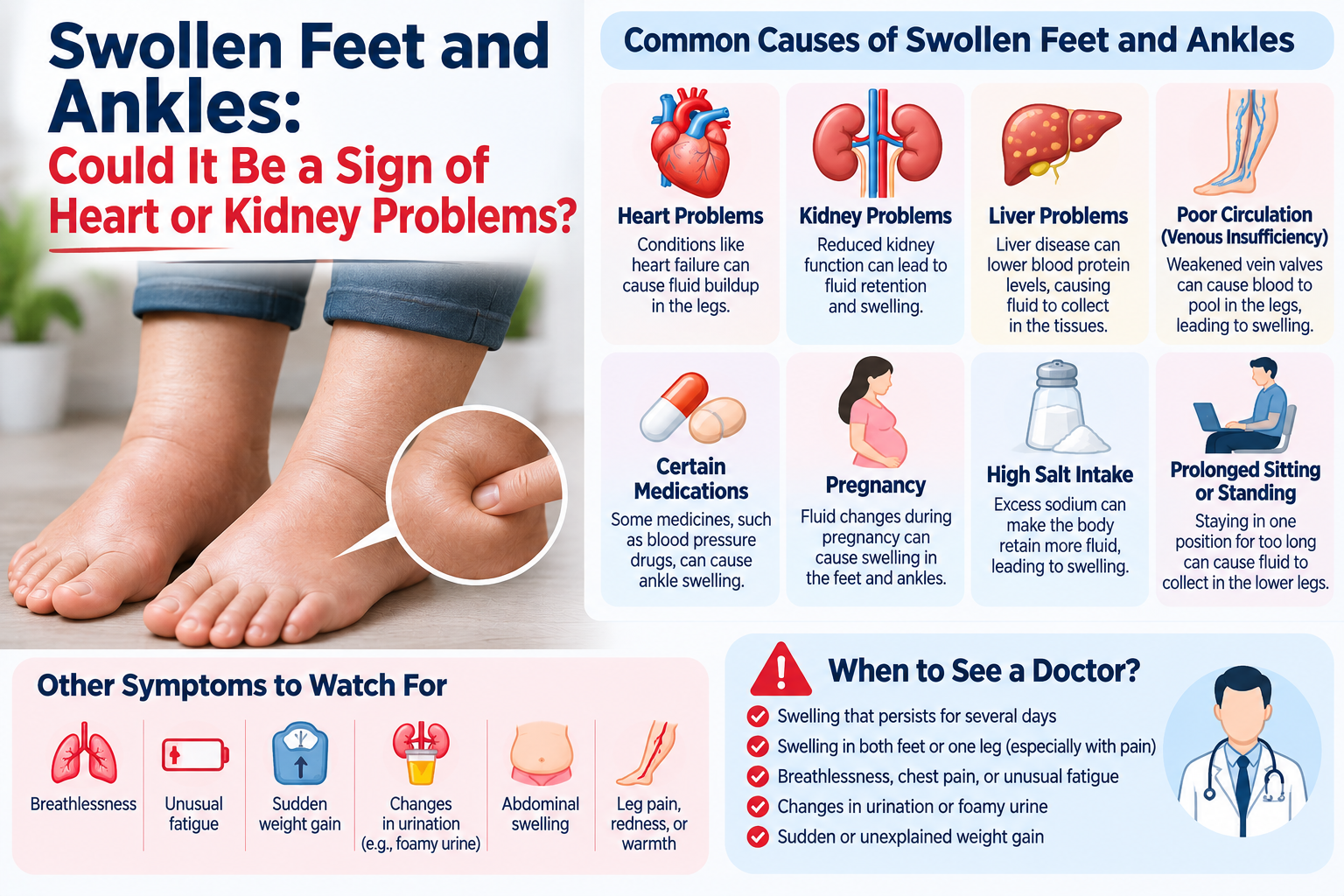
Swelling occurs when fluid accumulates in the spaces between body tissues. This can happen when blood vessels allow excess fluid to escape, when circulation is impaired, or when the kidneys cannot maintain the body’s normal fluid balance.
Common causes include:
- Prolonged sitting or standing
- Excessive salt consumption
- Certain medications
- Pregnancy
- Venous insufficiency
- Heart conditions
- Kidney disorders
- Liver disease
- Blood clots in the legs
The location, duration, and pattern of swelling can provide useful clues about its underlying cause.
1. Heart Problems and Swollen Feet
One important medical condition associated with swollen feet and ankles is heart failure.
The heart normally pumps blood throughout the body. When its pumping or filling function becomes impaired, blood circulation can become less efficient, potentially causing fluid to accumulate in different parts of the body.
This fluid retention commonly affects the feet, ankles, and lower legs.
Why Does Heart Failure Cause Swelling?
When the heart cannot pump blood effectively, pressure may increase in the veins. This can cause fluid to move from blood vessels into surrounding tissues.
The kidneys may also retain more sodium and water as the body responds to reduced effective blood circulation, contributing to additional fluid buildup.
Warning Signs Associated With Heart-Related Swelling
Watch for symptoms such as:
- Swelling in both feet and ankles
- Breathlessness during physical activity
- Difficulty breathing while lying flat
- Waking up at night feeling short of breath
- Persistent fatigue
- Rapid weight gain due to fluid retention
- Reduced ability to perform everyday activities
Swollen ankles accompanied by breathlessness or difficulty lying flat should be medically evaluated. These symptoms may indicate heart failure or another cardiovascular condition.
2. Kidney Problems and Fluid Retention
The kidneys play an essential role in maintaining fluid and electrolyte balance. They filter waste products from the blood and remove excess water through urine.
When kidney function becomes impaired, the body may retain excess sodium and water, leading to swelling.
Certain kidney conditions can also cause protein to leak into the urine. Reduced blood protein levels may contribute to fluid accumulation in tissues.
How Can You Recognize Kidney-Related Swelling?
Possible symptoms include:
- Swelling around the ankles and feet
- Puffiness around the eyes, particularly in the morning
- Changes in urination frequency
- Foamy urine
- Increased blood pressure
- Unexplained fatigue
- Reduced appetite
- Swelling in other parts of the body
However, early kidney disease may not cause noticeable symptoms. Some people discover a kidney problem only after routine blood or urine testing.
Which Kidney Tests May Be Recommended?
Depending on your symptoms, a physician may recommend:
- Serum creatinine: Measures a waste product in the blood that helps assess kidney function.
- eGFR: Estimates how effectively the kidneys filter blood.
- Urine routine examination: Checks for abnormalities such as protein or blood in urine.
- Urine albumin-to-creatinine ratio (UACR): Helps detect albumin leakage, an important early indicator of kidney damage.
- Electrolyte testing: Evaluates sodium, potassium, and other important minerals.
These investigations can help identify kidney-related abnormalities before complications become more severe.
3. Liver Problems Can Also Cause Swollen Feet
The liver produces albumin, a protein that helps maintain fluid within blood vessels.
Certain advanced liver conditions can reduce albumin production and contribute to fluid accumulation.
Liver disease can also cause increased pressure in the portal venous system, leading to fluid buildup in the abdomen and sometimes swelling in the legs.
Symptoms that may accompany liver-related swelling include:
- Swollen feet and ankles
- Abdominal swelling
- Yellowing of the skin or eyes
- Loss of appetite
- Unexplained fatigue
- Easy bruising
- Dark urine
If swelling occurs alongside abdominal enlargement or jaundice, medical evaluation is important.
4. Poor Blood Circulation and Venous Insufficiency
Not all cases of swollen feet are related to the heart or kidneys.
Chronic venous insufficiency occurs when the valves inside the leg veins do not function properly. As a result, blood can collect in the lower legs rather than returning efficiently toward the heart.
This can increase pressure in the veins and cause fluid to accumulate around the ankles.
Common symptoms include:
- Swelling that worsens toward the evening
- Heaviness in the legs
- Aching or discomfort
- Visible varicose veins
- Skin discoloration around the ankles
- Itching or skin changes
Swelling associated with venous insufficiency may improve after resting with the legs elevated.
However, persistent symptoms should be assessed to confirm the diagnosis and exclude other causes.
5. Blood Clots in the Legs
A blood clot in a deep vein, known as deep vein thrombosis (DVT), can cause sudden swelling in one leg.
Other symptoms may include:
- Pain or tenderness in the calf
- Warmth in the affected leg
- Redness or discoloration
- Swelling that develops over a short period
Sudden unexplained swelling in one leg requires prompt medical assessment, particularly when accompanied by pain or warmth.
If a blood clot travels to the lungs, it can cause a pulmonary embolism, which is a medical emergency.
Seek emergency help if leg swelling is accompanied by sudden breathlessness, chest pain, coughing up blood, or fainting.
6. Other Common Causes of Swollen Feet and Ankles
Several everyday factors and medical conditions can also contribute to swelling.
Prolonged Sitting or Standing
Remaining in one position for extended periods can cause fluid to collect in the lower legs due to gravity.
This is commonly noticed after long journeys, desk work, or standing for several hours.
Excessive Salt Intake
Eating large amounts of sodium can contribute to fluid retention, particularly in people with high blood pressure or existing heart and kidney conditions.
Medication Side Effects
Certain medications may cause ankle swelling, including:
- Some blood pressure medicines, particularly calcium channel blockers
- Certain anti-inflammatory pain medications
- Corticosteroids
- Some diabetes medications
If swelling begins after starting a medication, discuss it with your doctor. Do not stop prescribed medication independently.
Pregnancy
Swelling in the feet and ankles can occur during pregnancy due to changes in blood circulation and fluid balance.
However, sudden swelling, particularly involving the face or hands, when accompanied by headache, visual disturbances, or upper abdominal pain, requires urgent assessment for possible pre-eclampsia.
When Should You See a Doctor?
Occasional mild swelling after prolonged standing may not indicate a serious medical problem. However, persistent, unexplained, or worsening swelling deserves medical attention.
Consult a healthcare professional if you experience:
- Swelling that continues for several days
- Repeated swelling without an obvious explanation
- Swelling in both feet along with unusual fatigue
- Breathlessness during routine activities
- Changes in urination
- Foamy urine
- Unexplained weight gain
- Increasing abdominal swelling
- Skin discoloration around the ankles
Seek Emergency Medical Attention If You Experience:
- Sudden severe breathlessness
- Chest pain or tightness
- Fainting or severe dizziness
- Coughing up blood
- Sudden swelling in one leg accompanied by pain or warmth
- Rapidly worsening swelling with difficulty breathing
These symptoms may indicate serious cardiovascular or circulatory complications.
Which Tests Help Identify the Cause of Swollen Feet?
A physician may begin with a physical examination, medical history, blood pressure measurement, and assessment of the swelling.
Depending on the suspected cause, the following investigations may be recommended:
| Investigation | What It Helps Evaluate |
|---|---|
| Kidney function tests | Creatinine and eGFR |
| Urine examination | Protein, blood, and other abnormalities |
| UACR | Albumin leakage in urine |
| Liver function tests | Liver-related abnormalities |
| Serum albumin | Blood protein levels |
| ECG | Heart’s electrical activity |
| Echocardiography | Heart structure and pumping function |
| Venous Doppler ultrasound | Blood clots and venous circulation |
Not everyone requires all these tests. The appropriate investigations depend on your symptoms and clinical findings.
How Can You Reduce the Risk of Fluid Retention?
Managing the underlying cause is the most important step. However, certain lifestyle measures may help reduce swelling in appropriate individuals.
1. Reduce Excess Salt Intake
Limit excessive consumption of packaged snacks, processed foods, pickles, and other high-sodium foods.
2. Stay Physically Active
Regular walking and gentle leg movements can support blood circulation and reduce fluid pooling in the lower legs.
3. Avoid Sitting for Too Long
If you work at a desk or travel frequently, take regular movement breaks when possible.
4. Elevate Your Legs
When appropriate, resting with your legs elevated may help reduce swelling associated with prolonged standing or venous insufficiency.
5. Monitor Your Weight
Unexpected weight gain over a short period may indicate fluid retention, particularly in people with heart failure or kidney disease.
6. Follow Your Medical Treatment
If you have diabetes, high blood pressure, heart disease, or kidney disease, follow your prescribed treatment and attend regular medical checkups.
Do not start diuretics (water tablets), compression stockings, or strict fluid restrictions without discussing them with your healthcare professional, as the appropriate approach depends on the cause of swelling.
Final Thoughts
Swollen feet and ankles may sometimes result from prolonged standing, excessive salt intake, or medication side effects. However, persistent swelling can also be associated with heart failure, kidney disease, liver conditions, and problems with blood circulation.
Pay attention to whether the swelling affects one or both legs, when it occurs, how long it lasts, and whether other symptoms are present.
If you notice persistent or unexplained swelling in your feet and ankles, consult an internal medicine physician to identify the underlying cause.
Early evaluation, appropriate diagnostic tests, and timely treatment can help prevent complications and protect your heart, kidneys, and overall health.