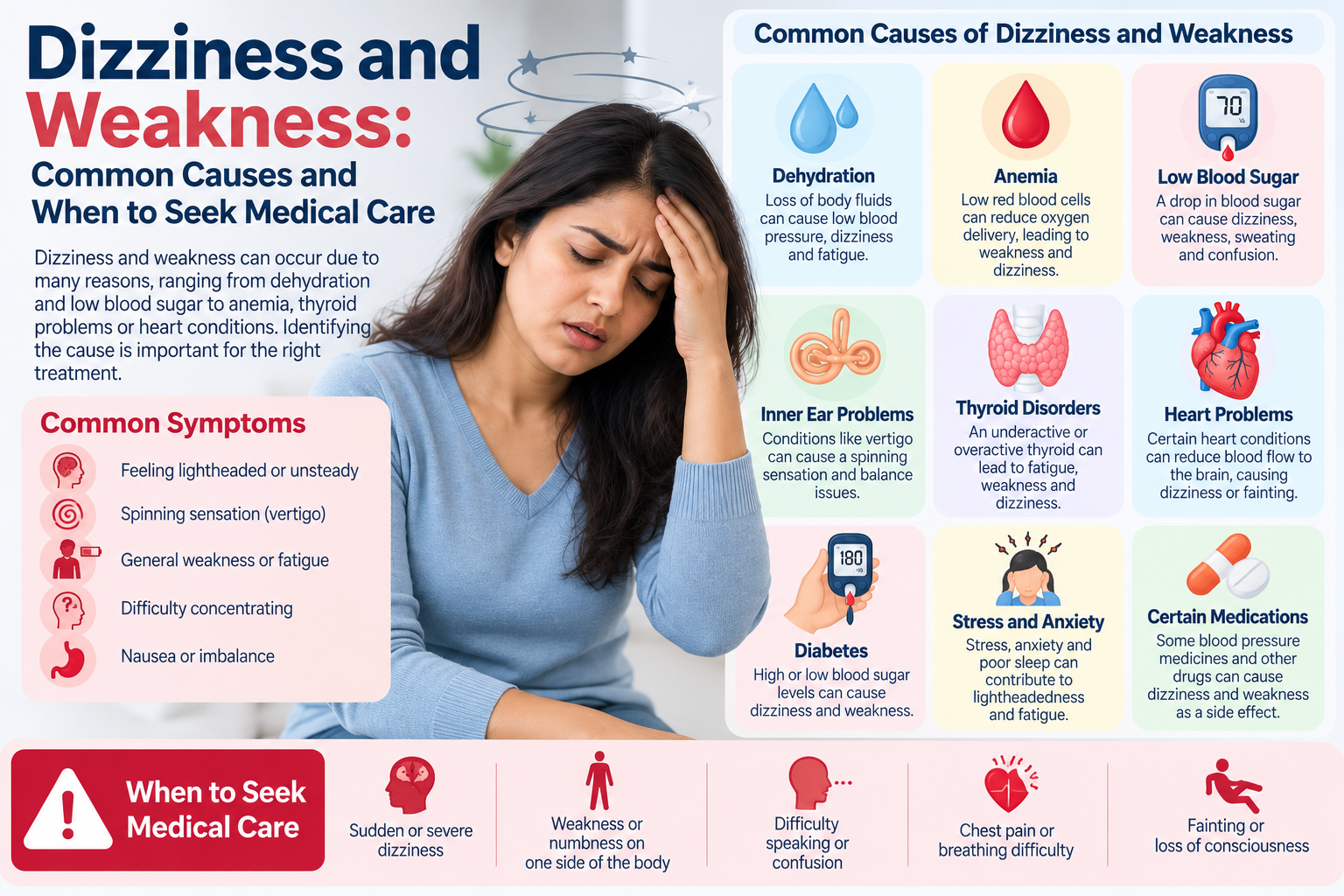
Feeling dizzy or unusually weak can make everyday activities difficult. You may experience lightheadedness when standing up, a spinning sensation while moving your head, or a general lack of energy that makes even simple tasks feel exhausting.
Occasional dizziness may occur because of dehydration, missed meals, or a temporary drop in blood pressure. However, persistent dizziness and weakness can sometimes indicate an underlying medical condition, such as anemia, diabetes, thyroid problems, heart disease, or an inner ear disorder.
Understanding the possible causes and recognizing warning signs can help you determine when medical evaluation is necessary.
What Is the Difference Between Dizziness and Weakness?
Although dizziness and weakness often occur together, they describe different symptoms.
Dizziness may refer to:
- Feeling lightheaded or as if you might faint
- Feeling unsteady while walking
- Experiencing a spinning sensation, known as vertigo
- Feeling disoriented or off balance
Weakness may refer to:
- Feeling unusually tired or lacking energy
- Having difficulty performing routine activities
- Experiencing reduced muscle strength
- Feeling physically exhausted despite adequate rest
The distinction matters because different symptoms can point toward different underlying causes.
1. Dehydration
Dehydration occurs when your body loses more fluid than it takes in. It may develop during hot weather, after excessive sweating, or following vomiting and diarrhea.
When fluid levels fall, blood volume can decrease, potentially causing dizziness, fatigue, and lightheadedness.
Common symptoms include:
- Dry mouth and increased thirst
- Dark yellow urine
- Reduced urination
- Headache
- Fatigue
- Dizziness when standing
Mild dehydration may improve with appropriate fluid intake. However, severe dehydration, persistent vomiting, confusion, or fainting requires urgent medical attention.
People with kidney disease or heart failure should follow their prescribed fluid restrictions rather than increasing fluid intake without medical advice.
2. Low Blood Pressure
Low blood pressure can cause dizziness, especially when standing up after sitting or lying down. This is sometimes called orthostatic hypotension.
When you stand, your body normally adjusts blood circulation to maintain blood flow to the brain. If this adjustment is insufficient, you may feel lightheaded or weak.
Possible causes include:
- Dehydration
- Certain blood pressure medications
- Prolonged bed rest
- Blood loss
- Heart conditions
- Some hormonal or neurological disorders
If dizziness repeatedly occurs when standing, consult a healthcare professional. Do not stop prescribed blood pressure medication without medical advice.
3. Low Blood Sugar
Low blood glucose, or hypoglycemia, can cause sudden dizziness, weakness, sweating, trembling, hunger, and difficulty concentrating.
It is particularly important for people taking insulin or certain diabetes medications.
If a person with diabetes is conscious and able to swallow safely, they should follow their prescribed hypoglycemia treatment plan. If possible, check their blood glucose level.
Severe hypoglycemia can cause confusion, seizures, or loss of consciousness. If the person is unconscious or cannot swallow safely, do not give food or drink by mouth; seek emergency medical assistance.
Dizziness can also occur with high blood sugar, particularly when it causes dehydration. Therefore, symptoms alone cannot reliably determine whether glucose is low or high.
4. Anemia and Iron Deficiency
Anemia occurs when the blood does not have enough healthy red blood cells or hemoglobin to carry oxygen effectively.
Iron deficiency is a common cause, but anemia can also result from vitamin B12 deficiency, chronic disease, blood loss, and other conditions.
Symptoms may include:
- Persistent weakness
- Fatigue despite adequate sleep
- Dizziness or lightheadedness
- Pale skin
- Headaches
- Breathlessness during activity
- A rapid heartbeat
A complete blood count (CBC) can help identify anemia. Additional tests, such as ferritin, iron studies, or vitamin B12 measurements, may be recommended depending on the suspected cause.
Avoid taking iron supplements without medical advice, because not all anemia is caused by iron deficiency.
5. Vitamin B12 Deficiency
Vitamin B12 is essential for red blood cell production and healthy nerve function. Low levels can contribute to fatigue, weakness, and certain neurological symptoms.
Possible warning signs include:
- Persistent tiredness
- Numbness or tingling in the hands and feet
- Difficulty maintaining balance
- Memory or concentration problems
- Pale skin
- Weakness
People following strict vegetarian or vegan diets, those with certain digestive conditions, and some older adults may have a higher risk of deficiency.
A healthcare professional may recommend a vitamin B12 blood test when symptoms and medical history suggest a possible deficiency.
6. Diabetes and Blood Sugar Changes
Diabetes can cause dizziness and weakness through several mechanisms, including high or low blood glucose, dehydration, and medication-related effects.
When blood sugar becomes very high, the body may lose excess fluid through urination, leading to dehydration and fatigue.
People with diabetes should follow their monitoring and treatment plan when these symptoms occur.
Seek urgent medical care if dizziness or weakness occurs with vomiting, abdominal pain, deep or rapid breathing, confusion, or severe dehydration, as these can be warning signs of a serious diabetes-related complication.
7. Inner Ear Problems and Vertigo
The inner ear plays an important role in maintaining balance. Disorders affecting the inner ear can produce vertigo, a sensation that you or your surroundings are spinning.
Common causes include benign paroxysmal positional vertigo (BPPV), vestibular neuritis, and other balance disorders.
Symptoms may include:
- Spinning sensations when turning the head
- Nausea or vomiting
- Difficulty maintaining balance
- Feeling unsteady while walking
- Symptoms triggered by particular head movements
Treatment depends on the underlying cause. If vertigo is new, severe, persistent, or accompanied by other neurological symptoms, medical evaluation is important.
8. Thyroid Disorders
The thyroid gland regulates metabolism through the production of thyroid hormones. When these hormone levels are abnormal, they can affect energy levels, heart rate, and overall well-being.
An underactive thyroid may cause fatigue, weakness, cold sensitivity, constipation, and weight gain.
An overactive thyroid may cause a rapid heartbeat, trembling, sweating, anxiety, and muscle weakness.
If dizziness and weakness occur alongside these symptoms, a doctor may consider thyroid function testing, including TSH and, when appropriate, free T4.
9. Heart Problems
Certain heart conditions can reduce the amount of blood reaching the brain and other organs, resulting in dizziness, weakness, or fainting.
Possible causes include abnormal heart rhythms, heart valve disorders, and other conditions that affect cardiac function.
Warning signs may include:
- Dizziness during physical activity
- Episodes of fainting
- A racing or irregular heartbeat
- Breathlessness
- Chest discomfort
- Unusual fatigue
Dizziness associated with chest pain, severe breathlessness, or fainting requires emergency medical evaluation.
10. Stress, Anxiety, and Poor Sleep
Stress and anxiety can contribute to lightheadedness, fatigue, muscle tension, and difficulty concentrating. Rapid breathing during a panic attack may also cause dizziness or tingling sensations.
Poor sleep can contribute to daytime weakness, reduced concentration, and a general feeling of exhaustion.
However, persistent or unexplained symptoms should not automatically be attributed to stress. A healthcare professional can help determine whether a medical condition is contributing.
When Should You Seek Medical Care?
The urgency depends on the severity of symptoms and whether other warning signs are present.
Seek emergency medical help if dizziness or weakness occurs with:
- Sudden weakness or numbness affecting one side of the body
- Facial drooping or difficulty speaking
- Sudden difficulty walking or loss of coordination
- New severe headache
- Chest pain or severe breathing difficulty
- Fainting with ongoing symptoms
- Confusion or reduced consciousness
- Severe bleeding
These symptoms may indicate a serious condition, including a stroke or heart problem. Do not wait for them to resolve on their own.
Arrange a medical appointment if you experience:
- Repeated episodes of dizziness
- Weakness that persists for several days
- Unexplained fatigue despite adequate rest
- Frequent dizziness when standing
- Palpitations or reduced exercise tolerance
- Unexplained weight changes
- Persistent numbness or tingling
- Symptoms that interfere with normal daily activities
Early evaluation can help identify the cause and guide appropriate treatment.
Which Tests May Be Needed?
There is no single test that identifies every cause of dizziness and weakness. Your doctor may begin with a medical history, physical examination, blood pressure measurement, and assessment of your symptoms.
Depending on the findings, investigations may include:
- Complete blood count (CBC): Checks for anemia and certain blood abnormalities.
- Blood glucose: Evaluates blood sugar levels.
- Electrolyte tests: Check important minerals and fluid-related imbalances.
- Kidney function tests: Assess kidney health and may help identify related problems.
- Thyroid function tests: Evaluate thyroid hormone regulation.
- Vitamin B12 or iron studies: Investigate suspected nutritional deficiencies.
- ECG: Evaluates the heart’s electrical activity when a cardiac cause is suspected.
- Further neurological or vestibular assessment: May be needed for balance problems or vertigo.
Not everyone needs all these tests. The appropriate investigations depend on your symptoms, medical history, medications, and examination findings.
How Can You Help Prevent Dizziness and Weakness?
Some simple measures may help reduce symptoms when they are related to everyday factors.
Stay adequately hydrated. Drink fluids according to your healthcare provider’s advice, especially during hot weather or after sweating.
Eat regular, balanced meals. Avoid skipping meals if doing so triggers weakness, and follow your diabetes treatment plan if you have blood glucose problems.
Stand up gradually. If you feel lightheaded after sitting or lying down, change positions slowly and hold onto a stable surface.
Get sufficient sleep. Maintaining a regular sleep schedule can support energy and concentration.
Review your medications with your doctor. Some medicines can contribute to dizziness or low blood pressure. Never change your prescribed treatment independently.
Avoid driving when dizzy. Sit or lie down somewhere safe if you feel faint or unsteady, and ask for help if necessary.
These measures do not replace medical evaluation when symptoms are persistent, severe, or unexplained.
Final Thoughts
Dizziness and weakness can result from dehydration, low blood pressure, blood sugar changes, anemia, vitamin deficiencies, inner ear disorders, thyroid problems, or heart conditions.
While occasional mild symptoms may have a simple explanation, repeated or persistent episodes deserve medical attention.
If you experience unexplained dizziness and weakness, consult a healthcare professional rather than relying on supplements or home remedies alone. Identifying the underlying cause is the most effective way to determine the right treatment.
Remember, sudden dizziness accompanied by one-sided weakness, difficulty speaking, chest pain, severe breathing difficulty, or loss of consciousness is a medical emergency.